English
 中文
中文 Español
 русский
 français
 português
 العربية
 Deutsch
 italiano
 한국어
한국어 Polska
×
Top hammer and down-the-hole (DTH) drilling are two dominant percussive drilling methods widely used in mining, quarrying, construction, tunneling, and geotechnical projects. Both rely on high-frequency impacts combined with rotation to fracture rock, but their mechanical design, energy delivery, and performance characteristics differ significantly. Choosing between them depends on hole depth, rock type, diameter requirements, and project goals.
Both techniques use percussion to create micro-fractures in the rock and rotation to shear away loosened material, while air, water, or foam flushes cuttings from the hole to maintain clear visibility and prevent jamming.
Top Hammer Drilling: The percussion mechanism (hydraulic or pneumatic drifter/hammer) is mounted on the surface rig. It strikes the top of the drill string repeatedly, transmitting shock waves through the rods to the bit at the bottom.
DTH Drilling: The hammer is integrated directly behind the drill bit at the hole bottom. Compressed air powers an internal piston that strikes the bit face-on, delivering impact energy right at the rock interface.
Hammer placement is the most fundamental difference:
Top Hammer: Hammer located at the rig top. Energy must travel down the entire drill string, losing power at each threaded connection (typically 4–6% per joint) and attenuating further with depth due to wave reflection and rod flexing.
DTH: Hammer positioned at the bottom of the hole, directly above the bit. Impact energy is delivered instantaneously with almost no transmission loss, maintaining full power even in very deep holes.
Depth and diameter ranges vary considerably:
| Feature | Top Hammer Drilling | DTH Drilling |
| Typical Hole Depth | Up to 20–30 m (optimal <15–20 m) | 30–50 m+ (can reach 100–200 m in some cases) |
| Common Hole Diameters | 64–127 mm | 89–254 mm+ (larger sizes common) |
| Maximum Practical Depth | Limited by energy loss and rod flex | Excellent for deep holes |
Penetration rate depends on rock hardness, bit design, and operating parameters:
Top hammer drilling tools deliver very high blow frequency (30–60 blows/sec), providing excellent initial penetration in softer to medium-hard rock. However, rate declines noticeably beyond 15–20 m as energy dissipates through the string.
DTH uses lower frequency (25–35 blows/sec) but maintains consistent high-energy blows, resulting in stable and often superior overall penetration in hard or abrasive formations. It requires a reliable high-capacity air compressor.
Accuracy is critical for blast patterns, anchoring, and exploration:
Top Hammer: Prone to deviation in longer holes due to rod whip, uneven feed force, and shock wave reflections. Stabilizers and careful alignment help, but straightness decreases noticeably beyond 15–20 m.
DTH: Excellent straightness. The bottom-mounted hammer acts as a natural guide, minimizing deviation even in fractured or dipping geology. Ideal when precise alignment is required.
Top hammer is the go-to choice for:
Surface quarrying and bench blasting in small to medium sites
Tunneling with jumbo rigs
Construction tasks such as rock bolting, trenching, and utility holes
Road and infrastructure projects
Shallow exploration and softer to medium-hard rock conditions
DTH dominates in:
Open-pit mining with large blast patterns
Deep quarrying
Water wells and geothermal drilling
Hard rock foundation and piling work
Applications requiring precise, straight deep holes in abrasive formations
| Scenario / Requirement | Recommended Choice | Main Reasons |
| Shallow holes (<20–25 m) | Top Hammer | Faster setup, lower air consumption, higher initial speed |
| Medium to deep holes (>30 m) | DTH | Consistent energy, minimal loss, better performance at depth |
| Small-medium diameters (64–127 mm) | Top Hammer | Cost-effective equipment and consumables |
| Large diameters (89–254 mm+) | DTH | Higher torque and impact capability |
| Hard, abrasive rock | DTH | Superior penetration and tool life |
| Soft-medium rock, frequent rig moves | Top Hammer | Versatile, mobile, lower operating cost |
| High straightness/accuracy required | DTH | Natural guiding effect reduces deviation |
| Budget-sensitive shallow projects | Top Hammer | Lower initial investment and maintenance |
In summary, top hammer drilling excels in shallow, medium-hard applications where speed, mobility, and cost are priorities, while DTH drilling dominates in deeper, harder, or precision-demanding scenarios thanks to direct energy delivery, superior straightness, and consistent performance. Selecting the right method can improve penetration rates by 20–50%, reduce consumable costs, and enhance overall project efficiency.
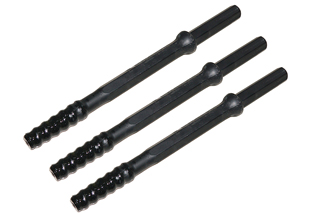
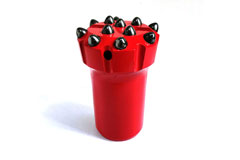
For high-quality top hammer and DTH consumables built to deliver reliable performance in demanding conditions, Litian offers a full range of top hammer tools.

Litian is a professional manufacturer focused on the production of rock drilling tools and excavation tools.
Learn More >