English
 中文
中文 Español
 русский
 français
 português
 العربية
 Deutsch
 italiano
 한국어
한국어 Polska
×
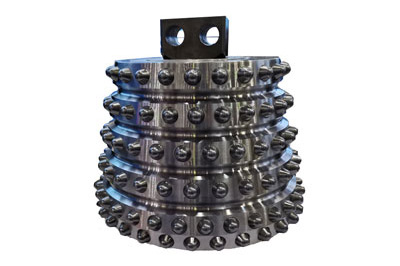
Maintaining RCD roller cutters is essential for ensuring long-term reliability, optimal performance, and cost savings in drilling operations. These tools, also referred to as random roller cutters or raise boring cutters, are subjected to intense stresses from rock fragmentation, high loads, and environmental factors like water and abrasives. Proper care not only extends their lifespan but also prevents costly breakdowns that could halt mining, tunneling, or infrastructure projects. Litian Tools' RCD roller cutters are built with durable materials and repairable designs, making maintenance straightforward and effective.
This guide covers daily maintenance routines, best practices for optimizing drilling performance, common troubleshooting techniques, and suggestions for upgrades and customizations. Drawing from industry expertise, field experiences, and technical recommendations, we'll provide step-by-step instructions, checklists, and real-world tips to help drilling teams, maintenance crews, and procurement managers keep their equipment in top condition. Whether you're dealing with reverse circulation drilling in hard rock or raise boring in confined spaces, following these practices can improve efficiency by 20-30% and reduce replacement needs. We'll include practical examples, safety considerations, and integration advice to make this resource comprehensive and applicable.
Routine maintenance forms the foundation of RCD roller cutter longevity, focusing on proactive inspections and minor adjustments to catch issues early. Implementing a daily checklist can prevent 70-80% of common failures, according to industry data from extended field operations.
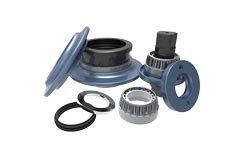
Bearings and seals are critical components that bear the brunt of operational stresses, and their failure can lead to catastrophic downtime. Start each day with a visual and tactile inspection: check for unusual heat buildup (using an infrared thermometer—temperatures above 100°C indicate problems), excessive noise during rotation, or lubricant leaks. For tapered or thrust roller bearings, measure axial play with a dial gauge; anything over 0.5mm suggests wear. Ball bearings should be spun manually to detect roughness or binding.
Seals, particularly hydrostatic types in Litian's cutters, should be examined for cracks, deformation, or signs of water ingress. In underwater RCD applications, test seal integrity by pressurizing the system to 50 bar and monitoring for drops. Replacement is recommended every 500-800 hours or sooner in abrasive environments. To replace, disassemble the cutter in a clean workspace, using Litian-approved tools to avoid damaging cones. Install new seals with proper lubrication (e.g., high-temperature grease rated for 150°C), ensuring O-rings are seated correctly. Post-replacement, run a low-speed test (3-5 RPM) for 10 minutes to verify smooth operation.
In a South American mining site, regular bearing inspections on Litian's 12" cutters prevented a potential failure during a 300-meter shaft drill, saving days of delay. Always document inspections in a log, noting torque values (e.g., 200-300 Nm for assembly) and any anomalies for trend analysis.
Tungsten carbide (TCI) buttons are the cutting edge of the RCD roller cutter, and their condition directly impacts penetration efficiency. Daily assessments involve measuring button height and protrusion using calipers or a wear gauge—aim for less than 20% height loss before action. The random distribution means wear may be uneven; inspect all cones for chipping, cracking, or flattening, especially on conical buttons which handle primary impact.
In hard rock (f≤15), buttons can wear at 0.05-0.1 mm per hour; use a magnifying tool to spot micro-fractures. If wear exceeds 30%, rotate the cutter on the rig to redistribute load, or replace individual buttons if the design allows (Litian offers modular inserts for this). Clean buttons post-use with compressed air and mild solvents to remove debris, preventing accelerated abrasion. For quantitative assessment, employ digital imaging apps to track changes over time.
A quarrying operation in Europe extended cutter life by 25% through daily wear logs, allowing timely interventions. Safety note: Always wear protective gear during assessments to avoid sharp edges or residual rock particles.
Beyond maintenance, optimizing how RCD roller cutters are used can maximize output while minimizing wear. These practices are based on geological adaptations and operational fine-tuning.
Optimal settings balance speed, load, and tool integrity. For standard RCD in medium rocks (80-150 MPa), recommend rotation speeds of 5-12 RPM and Weight on Bit (WOB) of 80-150 KN. In softer formations (f≤8), increase RPM to 15 for faster penetration but reduce WOB to 60 KN to avoid overheating. Monitor torque via rig sensors—exceeding 500 Nm signals overload.
Thrust load adjustments are key: use 100-170 KN for hard rock to ensure aggressive cutting without button fracture. Litian's cutters with thrust bearings handle peaks up to 200 KN, but always start low and ramp up based on real-time feedback. In reverse circulation, align settings with flushing rates (500-1000 L/min air/fluid) to prevent cuttings buildup. Field tests show these parameters can boost penetration by 15-25%, as seen in an Asian tunneling project where calibrated settings reduced energy use by 20%.
Document settings per shift and adjust for geology changes, using data loggers for precision.
Underwater drilling requires specialized techniques to protect seals and maintain efficiency. Prime hydrostatic seals before submersion and use air injection (10-15 m/s) to create a bubble curtain, minimizing water ingress. In depths over 50 meters, monitor pressure differentials and limit sessions to 4 hours to avoid fatigue.
For hard rock environments (150-250 MPa), employ pulse drilling: alternate high WOB (150 KN) for 30 seconds with low (80 KN) for 10 seconds to fracture rock without continuous stress. This reduces vibration by 30% and extends button life. In raise boring, position cutters at 20° tapers for better stability. A bridge project in Oceania applied these techniques, achieving 1.5 m/h rates in submerged granite without failures.
Always conduct pre-drill simulations or pilot holes to refine techniques.
Troubleshooting addresses inevitable issues, turning potential problems into quick fixes with minimal impact.
Cuttings transport issues, like clogging or poor evacuation, often arise from mismatched flushing or cutter design. Causes include insufficient air/fluid velocity (below 10 m/s) or oversized particles in abrasive rocks. In RCD setups, this manifests as reduced penetration or rig strain.
Solutions: Increase flushing rates by 20% or switch to air injection for better lift. Clean internal channels with high-pressure washes and verify cutter size matches hole diameter (e.g., 12" for 1200-3500mm). If persistent, inspect for button misalignment causing uneven flows. A U.S. infrastructure site resolved 80% of transport issues by recalibrating to CFD-recommended parameters, restoring efficiency within hours.
Preventive strategies focus on holistic care: store cutters in climate-controlled areas (below 40°C, low humidity) with protective covers to prevent corrosion. Apply anti-seize compounds on threads during assembly and schedule bi-weekly deep cleans using ultrasonic baths for debris removal.
Lubricate bearings quarterly with specified greases and rotate stock to ensure even usage. Training operators on signs of overload (e.g., unusual vibrations) prevents 60% of premature wear. In a long-term mining contract, these measures extended Litian cutter life from 800 to 1,200 hours.
As projects evolve, upgrading RCD roller cutters ensures they meet new demands.
Start with standard models (e.g., 8" for medium tasks) and transition to customs based on performance data. Analyze wear logs to identify needs, like harder carbide for f≤20 rocks. Litian facilitates this with modular upgrades—swap bearings or buttons without full replacement. Lead times are 30-45 days, with prototypes for testing.
A transition in an African mine improved durability by 25% through customized tapers.
For integration, match cutter channels to air flows (800 L/min) and test compatibility with Liebherr systems via simulations. Adjust RPM down 10% to optimize particle lift. Tips: Use sensor-equipped cutters for real-time monitoring and calibrate for dry/wet hybrids. This setup enhanced a European quarry's output by 20%.

Litian is a professional manufacturer focused on the production of rock drilling tools and excavation tools.
Learn More >