English
 中文
中文 Español
 русский
 français
 português
 العربية
 Deutsch
 italiano
 한국어
한국어 Polska
×
Drilling in mining is a fundamental process that involves creating holes in the earth’s crust to explore mineral deposits, extract resources, and prepare rock for blasting. It serves as the foundation of both exploration and production stages in the mining industry. Without effective drilling, modern mining operations would be inefficient, unsafe, and far less productive.
Drilling plays a critical role throughout the entire mining lifecycle. In the exploration phase, it helps geologists obtain core samples to evaluate the quality, quantity, and location of mineral deposits. During production, drilling is essential for blast hole creation, which enables controlled rock fragmentation. Proper mine planning also relies heavily on accurate drilling data to optimize pit design, scheduling, and resource recovery. In short, drilling in mining directly impacts safety, cost-efficiency, and overall project success.
There are two primary categories of drilling in mining: exploration drilling and production (or blast hole) drilling.
Exploration drilling focuses on discovering and defining mineral resources using core drilling techniques. Production drilling, on the other hand, is used to create blast holes for explosives. Production holes are typically larger in diameter and shallower compared to exploration holes.
Blast hole drilling is the most common method in open-pit and underground mining. It prepares the rock mass for blasting, allowing efficient excavation and ore extraction.
Top hammer drilling is suitable for medium-depth holes in medium-hard rock, while Down-The-Hole (DTH) drilling performs better in deeper holes and harder formations due to its higher energy efficiency and straighter holes.
High-quality tools are crucial for successful mining drilling operations.
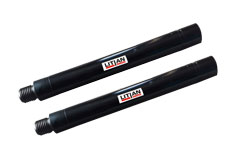
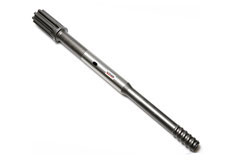
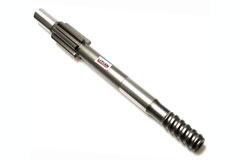
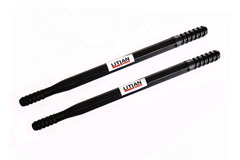
Shank adapters transmit impact energy from the rock drill to the drill rod. Litian shank adapters are engineered for excellent durability and perfect compatibility with Atlas Copco, Sandvik, and other popular drill rigs.
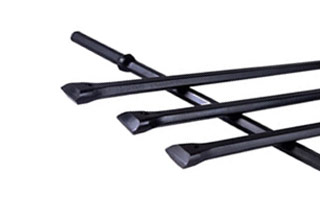
Button bits are the frontline tools that break the rock. Combined with high-performance drill rods, they determine penetration rate and tool lifespan. Litian’s button bits are known for superior wear resistance and consistent performance across various rock types.
Selecting the correct shank adapters, drill rods, and button bits according to rock hardness, drilling depth, and rig type can significantly improve efficiency and reduce operational costs.
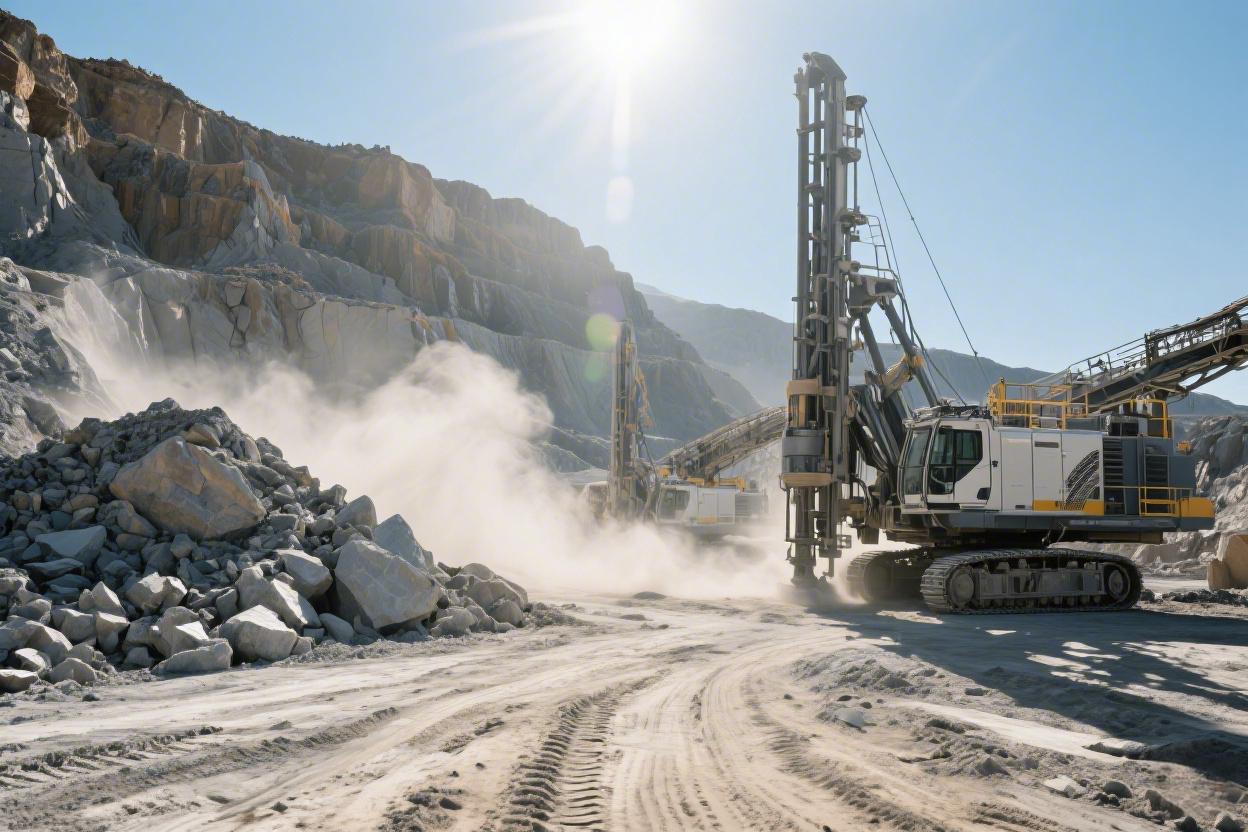
Drilling in mining must balance productivity with environmental stewardship, as operations can impact soil, water, and local ecosystems. Responsible drilling minimizes surface disturbance, manages waste, and reduces water contamination risks. For instance, modern drilling rigs use water-based flushing systems to clear rock cuttings, which must be carefully managed to prevent sediment runoff into nearby waterways. Litian's shank adapters support efficient flushing, reducing water usage by ensuring clean boreholes with minimal debris buildup.
Environmental regulations, such as those enforced by Canada's Mining Association or Australia's Environmental Protection Authority, require mines to monitor drilling impacts. Closed-loop fluid systems and biodegradable drilling fluids are increasingly used to mitigate contamination risks. Litian's tools, with corrosion-resistant coatings, are ideal for wet drilling environments, preventing premature wear in corrosive conditions like coal mines. Their advanced thread technology also facilitates easy disassembly, reducing maintenance-related waste.
Drilling for environmental assessments is another key application. Geotechnical drilling evaluates subsurface stability to prevent landslides or subsidence, protecting both the environment and local communities. Litian's custom shank adapters, tailored for specific geological conditions, enhance precision in these assessments, ensuring accurate data for sustainable mine design. By prioritizing eco-friendly tool designs, Litian supports mining companies in meeting stringent environmental standards while maintaining efficiency.
Safety is paramount in mining drilling, where high-powered equipment, unstable rock formations, and remote sites pose significant risks. Drilling-related hazards include equipment failure, rock falls, and exposure to dust or noise. Robust safety protocols, combined with reliable tools, are essential to protect workers and ensure operational continuity.
Key safety measures include:
Equipment Maintenance: Regular inspection and lubrication of shank adapters and drill rods prevent failures that could lead to accidents. Litian’s tools undergo strict quality control, ensuring durability and reducing the risk of component breakage.
Operator Training: Workers must be trained to adjust drilling parameters, such as pressure and speed, to match rock conditions, avoiding excessive stress that could cause equipment or rock failure.
Dust and Noise Control: Drilling generates dust and noise, which can harm workers' health. Wet drilling systems, supported by Litian’s efficient flushing mechanisms, minimize dust, while proper ear protection mitigates noise risks.
Site Stability Monitoring: Drilling data helps identify unstable rock zones, allowing preemptive reinforcement with rock bolts or supports.
Litian's high-performance tools enhance safety by reducing equipment failures. Their shank adapters, compatible with Montabert (HC series) and Ingersoll-Rand (YH95) drills, are engineered for tight connections, minimizing vibrations that could destabilize rock or equipment. In projects like the Fangxi Tunnel, Litian's tools contributed to safe, efficient drilling over 648 days, demonstrating their reliability in high-risk environments.
| Aspect | Role in Mining Drilling | Litian's Contribution |
|---|---|---|
| Mine Planning | Provides data for resource mapping and design | Durable shank adapters for precise drilling |
| Environmental Management | Minimizes ecological impact through efficient systems | Corrosion-resistant tools, efficient flushing |
| Safety Protocols | Ensures worker safety via reliable equipment | High-quality, compatible tools reduce failures |
| Tool Durability | Reduces downtime and replacement costs | Carburized alloy steel tools, 500–2,000 hours |
| Operational Efficiency | Enhances drilling speed and accuracy | CNC-machined adapters for energy transfer |
Litian Heavy Industry, based in Huludao, China, has over 15 years of experience supplying rock mining tools that elevate mining operations. Their shank adapters, drill rods, and button bits are designed for:
Reliability: Carburized alloy steel withstands abrasive and high-impact conditions, ensuring consistent performance.
Versatility: Compatible with major drill brands like Atlas Copco, Sandvik, and Furukawa, supporting diverse mining tasks.
Cost Efficiency: Long-lasting tools reduce maintenance and replacement costs, as proven in high-profile projects like the Fangxi Tunnel.
Sustainability: Corrosion-resistant coatings and efficient flushing systems align with environmental regulations.
Litian's commitment to innovation, backed by a 27,000-square-meter production facility and advanced manufacturing, ensures their tools meet the demands of modern mining, from exploration to production.
To maximize drilling success:
Plan Strategically: Use drilling data to inform mine design and optimize resource extraction.
Prioritize Environmental Care: Implement closed-loop flushing and biodegradable fluids to reduce ecological impact.
Enforce Safety Standards: Regularly maintain equipment and train operators to mitigate risks.
Choose Quality Tools: Partner with suppliers like Litian for durable, compatible components that enhance efficiency.
Drilling in mining is a strategic process that affects exploration, production, safety, and sustainability. By adopting the right methods, tools, and best practices, mining operations can become safer, more efficient, and environmentally responsible. Partnering with experienced suppliers like Litian ensures access to high-quality drilling solutions that deliver consistent performance in real-world conditions.
References
Mine Safety and Health Administration (MSHA). (2024). Safety and Health Materials - Drilling and Blasting. U.S. Department of Labor. Available at: https://www.msha.gov/safety-health/safety-health-materials/safety-topics/blasting-safety
National Institute for Occupational Safety and Health (NIOSH). (2023). Mining Safety and Health Research - Rock Drilling Hazards. Centers for Disease Control and Prevention. Available at: https://www.cdc.gov/niosh/mining/topics/index.html
Australian Centre for Geomechanics (ACG). (2012). Underground Drilling and Blasting Training Resources. The University of Western Australia. Available at: https://acg.uwa.edu.au/undergrounddbtrainingvideo/
International Labour Organization (ILO). Occupational safety and health in the mining (coal and other mining) sector. https://www.ilo.org/resource/occupational-safety-and-health-mining-coal-and-other-mining-sector
U.S. Geological Survey (USGS). (2022). Mineral Resources Program - Exploration Techniques. Available at: https://www.usgs.gov/programs/mineral-resources-program
What are the main types of drilling in mining?
The main types of drilling in mining include exploration drilling, which collects core samples to locate and evaluate mineral deposits, and production or blast hole drilling, which creates holes for explosives to fragment rock for extraction. Other common methods are top hammer drilling (suitable for medium-depth holes) and down-the-hole (DTH) drilling (ideal for deeper, harder rock). Choosing the right mining drilling method depends on depth, rock hardness, and project goals. High-quality tools like shank adapters and button bits from Litian can significantly improve performance across all types. Click to learn more about types of rock drill bits .
What tools are essential for effective mining drilling?
Essential tools include shank adapters, drill rods, and button bits. Shank adapters ensure efficient energy transfer, while high-quality button bits improve penetration and durability. Learn more about different types of rock drill bits and the top 5 essential hard rock mining tools.
What is the function of a rock drill shank adapter?
A rock drill shank adapter connects the rock drill to the drill rod and bit, transferring impact energy efficiently while ensuring secure and compatible connections. It plays a vital role in overall drilling performance and safety.
How can mining companies improve drilling efficiency?
Mining companies can improve efficiency by selecting the right drilling method and tools for the geology, optimizing parameters, and performing regular maintenance. Using durable shank adapters and button bits significantly increases penetration rates and reduces costs. Explore our guides on how mining drills work for practical tips.

Litian is a professional manufacturer focused on the production of rock drilling tools and excavation tools.
Learn More >