English
 中文
中文 Español
 русский
 français
 português
 العربية
 Deutsch
 italiano
 한국어
한국어 Polska
×
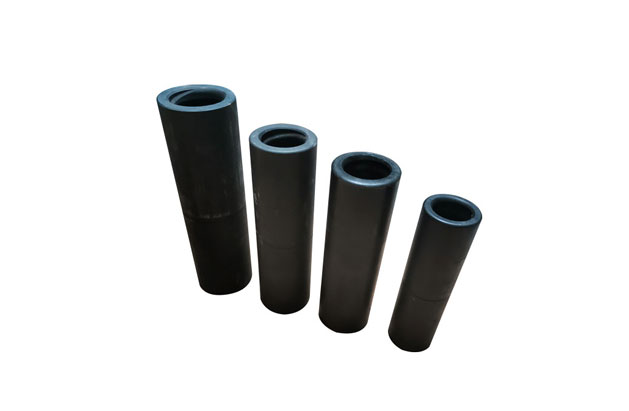
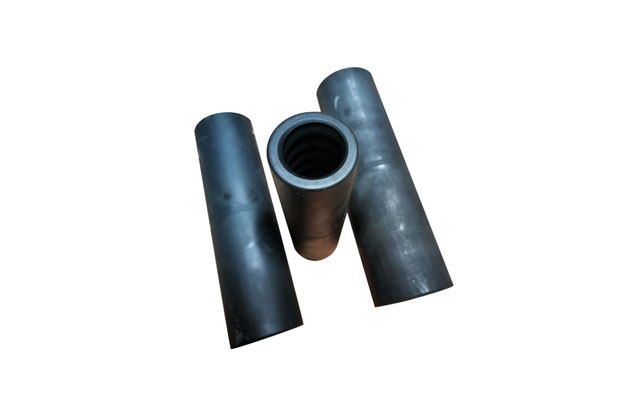
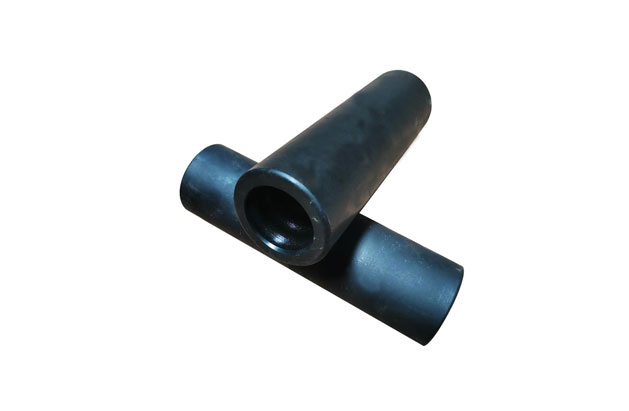
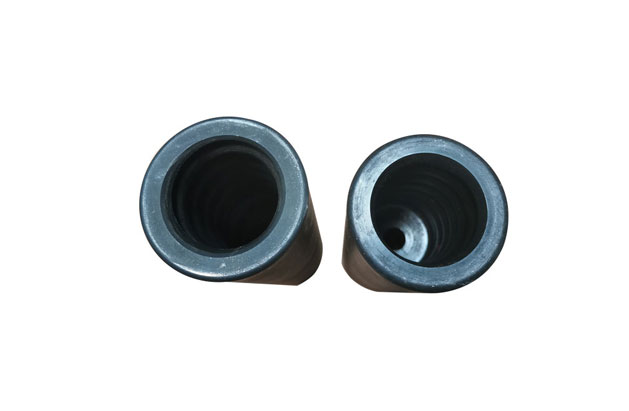
Coupling sleeves play a critical role in top hammer drilling by ensuring secure threaded connections and efficient transmission of impact energy between the shank adapter and drill rods, as well as between drill rods in extension drilling applications.
They also contribute to torque transmission, alignment stability, and thread protection under high-frequency percussion drilling conditions.
Proper alignment of threaded connections helps reduce vibration, minimize thread wear, and prevent loosening under heavy impact loads, especially in drifting, tunneling, and bench drilling applications.
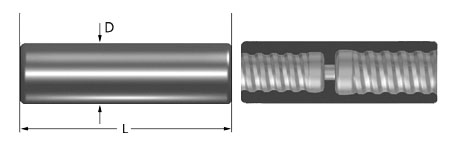
We offer three types of drill rod couplings: semi-bridge couplings, full-bridge couplings, and crossover couplings, designed to meet different drilling system requirements.
Product | Top Hammer Rock Drilling Tool - Coupling Sleeves |
Other Names | Couplings, Drill Rod Couplings, Drill Coupling Sleeve, |
Material | Structural Alloy Steel |
| Application | Tunneling , Mining , Quarrying, Blasting and Infrastructure Construction Facedrilling and Bolting, Bench Drilling, Production drilling, Long hole drilling, Drifting |
Thread | R25, R32, R35, R38, T38, T45, T51 |
Coupling Type | Standard Couplings (Semi bridge Couplings) Full bridge Couplings Crossover Couplings (Adapter Couplings, Reduction Couplings, Reducer Coupling) |
Diameter | 33~72mm |
Length | 150mm~235mm |
Custom Design | Thread, Diameter, Length can be customized |
Different coupling sleeve designs are used for different drilling applications, and choosing the correct type can significantly affect drilling stability, thread life, and impact energy transmission.
Design Feature
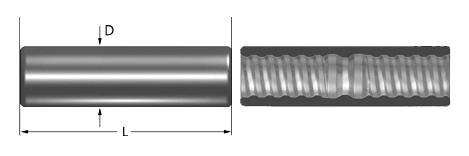
Central unthreaded bridge section
Acts as a mechanical stop for thread engagement depth
Functional Principle
The semi-bridge design controls the screwing depth of drill rods, preventing over-tightening while maintaining stable torque and energy transfer under percussion drilling conditions.
Key Advantages
Controlled thread engagement
Reduced risk of thread over-stressing
Balanced rigidity and flexibility
Stable performance under impact loads
Typical Applications
Drifting
Bench drilling
Production drilling
General rock excavation
Design Feature
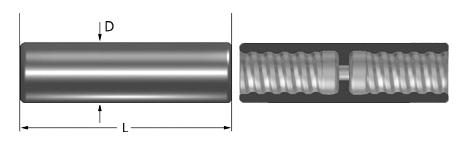
Fully threaded internal structure
No central stop or limitation zone
Functional Principle
Full-bridge couplings maximize thread contact length between rods, providing high rigidity and superior energy transmission efficiency for heavy-duty drilling operations.
Key Advantages
Maximum thread engagement area
High connection strength and rigidity
Excellent torque transmission
Reduced joint loosening under heavy percussion
Typical Applications
Deep hole drilling
Long-hole extension drilling
High-energy mining operations
Heavy-duty top hammer rigs
Design Feature
Two different thread types or sizes
Acts as a system interface adapter
Functional Principle
Cross-over couplings enable compatibility between different drilling systems by connecting rods with mismatched thread standards while maintaining torque and impact energy transmission.
Key Advantages
System compatibility flexibility
Enables mixed fleet operations
Reduces inventory complexity
Maintains stable mechanical performance
Typical Applications
Equipment conversion projects
Mixed drilling fleets
R-thread ↔ T-thread transitions
Custom drilling system integration
| Coupling Type | Thread Compatibility | System Role | Key Function |
| Semi-Bridge | Same thread type (R/R, T/T) | Standard connection | Controlled engagement |
| Full-Bridge | Same thread type (R/R, T/T) | Heavy-duty connection | Maximum strength |
| Cross-Over | Different thread types (R ↔ T) | Adapter connection | System transition |
Coupling sleeves play a critical role in ensuring stable connection integrity and efficient energy transmission in top hammer drilling systems, with different designs optimized for control, strength, or system compatibility across diverse drilling conditions.
Thread | Length | Diameter | Weight [kg] | Model No. | ||
[mm] | [in] | [mm] | [in] | |||
R32 | 160 | 6 1/4" | 45 | 1 3/4" | 1.0 | LR32-D45-160 |
R38 | 180 | 7 1/8" | 56 | 2 13/64" | 2.0 | LR38-D56-180 |
T38 | 190 | 7 1/2" | 56 | 2 13/64" | 1.9 | LT38-D56-190 |
T45 | 210 | 8 1/8" | 63 | 2 31/64" | 2.7 | LT45-D63-210 |
T51 | 235 | 9 1/4" | 71 | 2 51/64" | 3.8 | LT51-D71-235 |
R38-R32 | 190 | 7 1/2" | 56 | 2 13/64" | 2.2 | LR38/R32-D56-190 |
T38-R32 | 190 | 7 1/2" | 56 | 2 13/64" | 2.2 | LT38/R32-D56-190 |
T38-R38 | 190 | 7 1/2" | 56 | 2 13/64" | 2.5 | LT38/R38-56-190 |
T51-T45 | 225 | 8 7/8" | 71 | 2 51/64" | 4.5 | LT51/T45-D71-225 |
Coupling sleeve failure is typically caused by poor thread compatibility, excessive vibration, improper make-up torque, or high abrasion and impact drilling conditions. In top hammer drilling, poor rod alignment can accelerate thread wear, reduce energy transmission efficiency, and eventually lead to loosening or cracking during operation.
Using the correct coupling type, ensuring proper thread matching, and maintaining correct alignment and tightening practices can significantly improve drilling stability and extend tool service life.
Q: How to Choose the Right Coupling Sleeve?
A: Choosing the right coupling sleeve depends mainly on drilling conditions, thread compatibility, and drilling stability requirements. Standard coupling sleeves are suitable for general drifting and bench drilling, while full bridge couplings provide better rod alignment and improved energy transfer in high-impact drilling conditions. Crossover couplings are used when connecting drill rods with different thread types such as R32, R38, T45, or T51. Selecting the correct thread system helps reduce loosening, thread wear, and energy loss during drilling operations.
Q: Why is proper thread compatibility important in top hammer drilling?
A: Proper thread compatibility ensures that impact energy transfers efficiently through the entire drill string. When threads do not match—such as using a T38 rod with an R32 shank adapter—excessive vibration and frictional heat may occur. This leads to premature thread galling, reduced penetration rates, and, in severe cases, sudden drill rod fracture at the connection point. Incompatible threads also cause uneven load distribution, accelerating wear on both rods and bits.
Q: What causes coupling sleeves to loosen during drilling?
A: Coupling sleeves loosen primarily due to insufficient makeup torque, thread contamination and wear, or reverse rotation during drilling. Rock dust, moisture, and debris on threads prevent full engagement, allowing the sleeve to back off under percussion. Additionally, worn threads from repeated use reduce friction locking.
Q: What is the difference between standard and full bridge coupling sleeves?
A: A standard coupling sleeve has an open internal bore, while a full bridge coupling sleeve design includes a central unthreaded bridge section that acts as a thread stop between the two rods. This bridge reduces bending stress on the threads and improves energy transfer, especially in deep or inclined holes. Standard couplings are widely used for general drilling applications. Full bridge sleeves offer better thread protection and hole straightness when drilling through fractured ground or longer drill strings.
Q: When should crossover couplings be used?
A: Crossover couplings are used to connect components with different thread types, such as R-thread to T-thread transitions (e.g., R32 to T38). They allow operators to adapt existing drilling equipment across different systems or brands without replacing the entire drill string. However, because they introduce an additional connection interface, they may slightly reduce energy transmission efficiency and are typically used in short-hole, transitional, or non-critical drilling applications rather than deep production drilling.


Litian is a professional manufacturer focused on the production of rock drilling tools and excavation tools.
Learn More >